Permit Test: 02 of 05
Free New York DMV Written Driving Practice Test 2
Prepare for your New York learner permit knowledge test with practice questions covering the rules of the road, safe driving techniques, road signs and the laws about alcohol and drug use while driving.
STUDY TOPICS
Syllabus Covered
New York Driver’s Manual and Road Signs.
TEST FORMAT
Question Pool
Multiple-choice practice questions.
YOUR GOAL
Target Pass Mark
Aim for 70% or higher.
Before You Start the Test:
Read the official New York State Driver’s Manual at least twice, and make sure you know your road signs.
What does this sign mean?
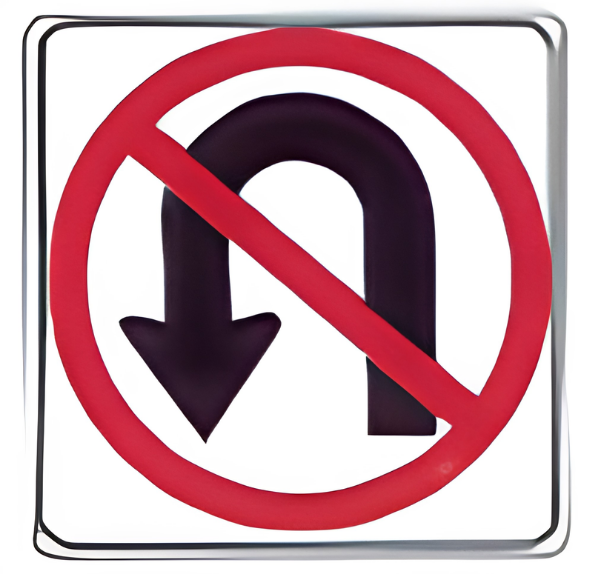
No U-turn.
No left turn.
No turning back after this point.
No right turn.
This sign means you are not permitted to make a U-turn at this location.
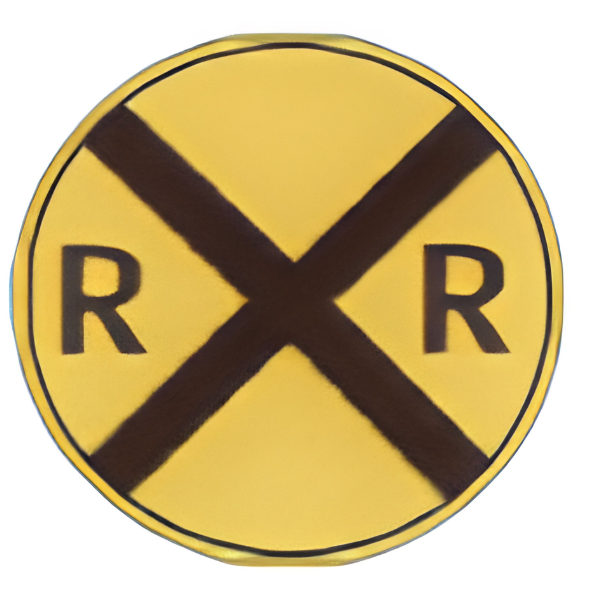
What does this sign mean?
Traffic signal ahead.
School crossing ahead.
Pedestrian crossing.
Railroad crossing ahead.
This sign warns that you are approaching a railroad crossing. Watch for trains and obey all warning devices.
How must you approach a bicyclist?
Slow down and give the bicyclist plenty of space.
Sound your horn and pass closely.
Drive at the same speed without changing lanes.
Force the bicyclist to move aside.
Approach bicyclists carefully, leave plenty of space, and pass only when it is safe to do so.
What should you check for when you leave an expressway?
Your tire pressure.
Your fuel level.
Traffic signs only.
Cross traffic and pedestrians.
When exiting an expressway, be prepared for slower traffic, intersections, pedestrians, and other road users.
What is the main reason night driving is more difficult than daytime driving?
There are fewer traffic signals.
You can see as far as in daylight.
Visibility is reduced.
Speed limits are lower at night.
Reduced visibility makes it harder to see hazards, judge distances, and react in time while driving at night.
Why is expressway driving different from normal driving?
Vehicles travel at higher speeds.
There are no traffic signs.
Drivers may stop anywhere.
Lanes are always wider.
Expressways are designed for higher-speed travel, so drivers have less time to react to changing traffic conditions.
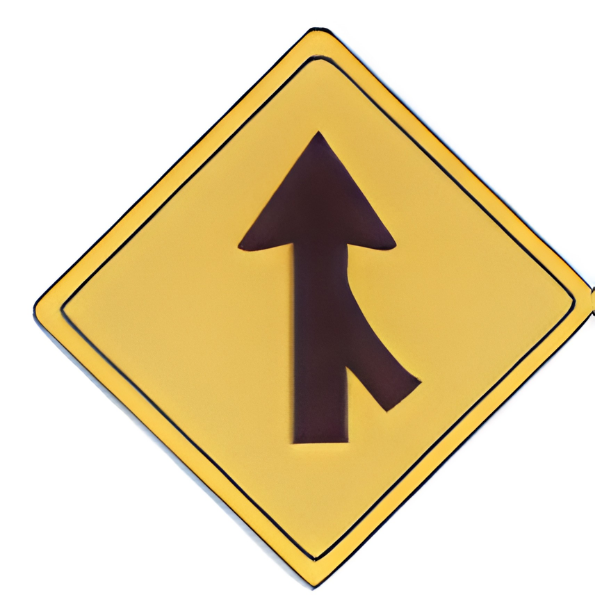
What does this sign mean?
Right lane ends.
Merging traffic entering from the right.
Divided highway begins.
Two-way traffic ahead.
This sign warns that traffic will be entering your lane from the right. Be prepared to adjust your speed or position if necessary.
On what three conditions does your blood alcohol content (BAC) depend?
Your age, height, and driving experience.
Alcohol consumed, body weight, and time spent drinking.
The type of vehicle, weather, and road conditions.
Your eyesight, gender, and speed.
BAC depends mainly on how much alcohol you drink, your body weight, and the amount of time over which you consume the alcohol.
What should you do if you are blinded by headlights on an approaching vehicle?
Look directly at the headlights.
Close your eyes briefly.
Slow down and look toward the right edge of the road.
Flash your high beams repeatedly.
If oncoming headlights reduce your vision, slow down and focus on the right edge of the road until you can see clearly again.
What does this sign mean?
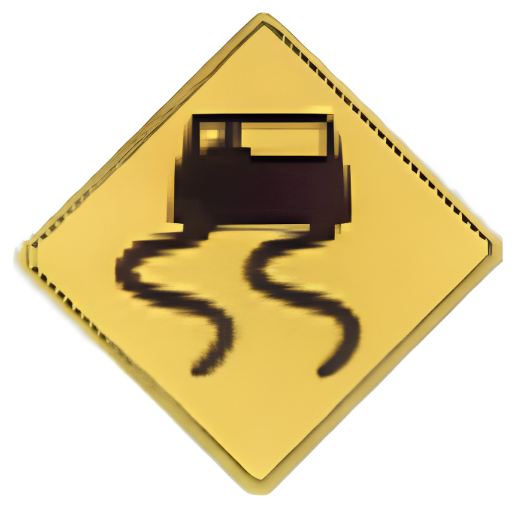
Slippery when wet.
Winding road ahead.
Uneven pavement.
Loose gravel.
This sign warns that the road may become slippery when wet. Reduce your speed and avoid sudden braking or sharp turns.
What is the purpose of minimum speed limits?
To keep traffic moving safely.
To reduce fuel consumption.
To allow safer passing on all roads.
To increase the maximum legal speed.
Minimum speed limits help maintain the normal flow of traffic. Driving too slowly can interfere with traffic and create a hazard unless road or weather conditions require a lower speed.
Is it always safe to drive at the assigned speed limit?
Yes, if traffic is light.
No, you must adjust your speed.
Yes, unless you are in a school zone.
Yes, you must always follow the speed limit.
The posted speed limit is the maximum legal speed under ideal conditions. Drivers must reduce speed when weather, road, traffic, or visibility conditions make it unsafe.
Driving within the range of your headlights indicates you can stop your vehicle within about how many feet?
100 feet.
200 feet.
300 feet.
500 feet.
At night, drive at a speed that allows you to stop within the distance illuminated by your headlights, which is about 200 feet for low beams.
What is a likely effect when you take another drug while you drink beverages containing alcohol?
The drug becomes harmless.
Alcohol cancels the effects of the drug.
Only the alcohol affects your driving.
The effects of both can become stronger.
Alcohol can increase the effects of many drugs, making you more impaired and increasing the risk of a crash.
Who must wear seat belts? Who should wear them?
Only the driver.
Only children under age 16.
All drivers and passengers.
Only front-seat passengers.
All drivers and passengers should wear seat belts because they help protect occupants and reduce the risk of serious injury or death in a crash.
What does this sign mean?

Road closed ahead.
Right turn only.
No passing zone.
Right lane ends - stay to the left.
This sign warns that the right lane ends ahead. Merge safely into the left lane when it is safe to do so.
Where there is no bicycle lane, where on the road must a bicyclist ride?
Near the right side of the roadway.
In the center of any lane.
On the left side facing traffic.
On the shoulder at all times.
When there is no bicycle lane, bicyclists should generally ride near the right side of the roadway, except when it is safer or necessary to move left.
What equipment must a bicycle have when used at night?
No lights if riding on city streets.
A flashing blue light.
A yellow light on both sides.
A white front light and a red rear light or reflector.
A bicycle used at night must have a white front light and a red rear light or reflector so it is visible to others.
If you take a non-prescription drug, what must you do before you drive?
Drive only during daylight hours.
Read the warning label to see if it can affect driving.
Take the medicine with food.
Wait at least 30 minutes before driving.
Some non-prescription medicines can cause drowsiness or slow your reactions. Always read the warning label before driving.
Must a bicyclist obey traffic laws and signs?
Only when riding on busy roads.
No, bicyclists follow different rules.
Yes, just like other drivers.
Only at traffic lights.
Bicyclists must obey the same traffic laws, signs, and signals that apply to other road users.