Permit Test: 01 of 05
Free New York DMV Written Driving Practice Test 1
Prepare for your New York learner permit knowledge test with practice questions covering the rules of the road, safe driving techniques, road signs and the laws about alcohol and drug use while driving.
STUDY TOPICS
Syllabus Covered
New York Driver’s Manual and Road Signs.
TEST FORMAT
Question Pool
Multiple-choice practice questions.
YOUR GOAL
Target Pass Mark
Aim for 70% or higher.
Before You Start the Test:
Read the official New York State Driver’s Manual at least twice, and make sure you know your road signs.
How should you drive safely through a work zone?
Change lanes frequently.
Speed up to clear the zone.
Follow other vehicles closely.
Slow down and stay alert.
Slow down, stay alert, and obey work-zone signs, signals, and flaggers. Be prepared for changing traffic patterns, lane closures, and workers near the roadway.
On average, how long does it take your body to remove the alcohol contained in 12 ounces of beer?
About 30 minutes.
About 1 hour.
About 2 hours.
About 4 hours.
On average, the body takes about one hour to remove the alcohol contained in 12 ounces of beer. Drinking coffee, exercising, or taking a cold shower does not make your body eliminate alcohol faster.
What does this sign indicate?
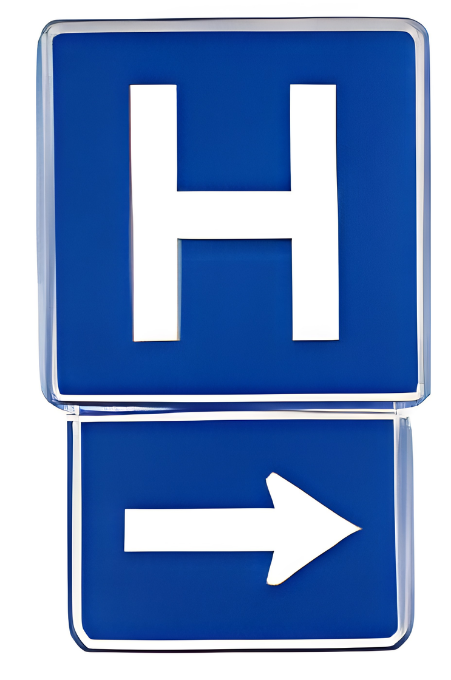
A highway entrance is nearby.
A hiking area is ahead.
A hospital is nearby.
A hotel is ahead.
This sign directs drivers toward or identifies a hospital. It alerts drivers to the location of medical services.
What is the main purpose of this sign?
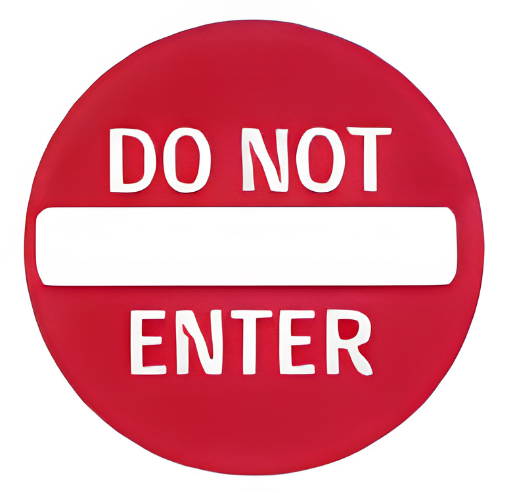
To warn drivers about a road closure.
To warn drivers not to enter in the wrong direction.
To indicate a dead-end road.
To mark a construction area.
This sign warns drivers that entering or continuing in that direction would place them in the wrong direction of traffic. Do not enter or continue in that direction.
How should you drive safely through a roundabout?
Yield only to vehicles behind you.
Stop in the roundabout.
Enter without slowing down.
Yield to traffic already in the roundabout.
Slow down before entering and yield to traffic already in the roundabout. Enter only when there is a safe gap, then follow the lane markings and signs.
What should you do if your wheels move off the pavement?
Brake hard and turn back quickly.
Slow down and gradually return to the pavement.
Turn sharply toward the road.
Accelerate to get back on the road.
Slow down without braking hard and keep the vehicle under control. When it is safe, gradually return to the pavement rather than turning sharply back onto the road.
What should you do when you approach this sign?
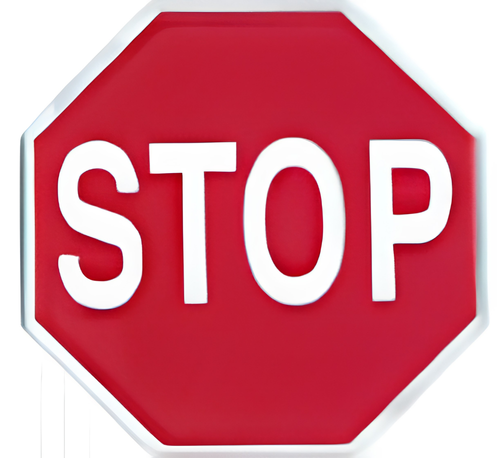
Slow down but continue without stopping.
Stop only if another vehicle is present.
Stop completely before proceeding.
Yield without stopping.
This sign requires a complete stop. After stopping, proceed only when it is safe and permitted by other traffic controls.
Which of these contains more alcohol than the other two?
1 1/2 oz. of liquor.
5 oz. of wine.
12 oz. of beer.
None; they contain about the same amount.
The listed amounts of liquor, wine, and beer contain about the same amount of alcohol. The type of drink does not determine how much it affects your BAC; the amount of alcohol consumed does.
What should you expect after seeing this sign?

A traffic signal ahead.
A change in the speed limit.
A railroad crossing ahead.
A stop sign immediately ahead.
This warning sign tells you that a traffic signal is ahead. Slow down and be prepared to stop when required by the signal.
What should you do if one of your tires blows out?
Hold the steering wheel tightly and slowly take your foot off the gas.
Brake hard immediately.
Turn sharply toward the shoulder.
Accelerate to maintain control.
Hold the steering wheel firmly and slowly take your foot off the accelerator. Do not brake immediately; allow the vehicle to slow down while maintaining control.
Which direction should you turn your steering wheel to get out of a skid?
Straight ahead.
Away from the direction of the skid.
In the direction you want the front of the vehicle to go.
Toward the center of the road.
Steer in the direction you want the front of the vehicle to go. Avoid sudden braking or steering movements while recovering from the skid.
What is road rage?
Angry or aggressive driving.
Driving while tired.
Driving too slowly.
Driving in heavy traffic.
Road rage is angry or aggressive driving that can become dangerous or violent. Stay calm, avoid challenging aggressive drivers, and do not respond to their actions.
Is it best to keep your headlights on high beam or low beam when there is fog, rain or falling snow?
High beam.
Low beam.
Parking lights.
Daytime running lights.
Use low-beam headlights in fog, rain, or falling snow. High beams can reflect off the moisture in the air and reduce your visibility.
How can you prevent fatigue on a long trip?
Skip meals.
Drive faster.
Open the windows.
Take regular rest stops.
Take regular rest stops during a long trip to help prevent fatigue. Get enough sleep before driving and stop to rest when you become tired.
How should you use your brake pedal on a slippery road?
Brake hard and quickly.
Brake early and gently.
Pump the brakes continuously.
Use the parking brake.
Brake early and gently on a slippery road. Sudden or hard braking can cause the wheels to lose traction and make it harder to control the vehicle.
Other than fines, action against your driver license and a possible jail term, what are some of the results when you drive under the influence of alcohol or other drugs?
No consequences if no crash occurs.
Lower insurance costs and fewer restrictions.
Only a warning from your insurance company.
Higher insurance costs and loss of employment.
Driving under the influence can lead to higher insurance costs, loss of employment, and other serious personal and financial consequences, in addition to legal penalties.
What is the first thing you should do if your brakes fail?
Try to make the brakes work.
Shift into a higher gear.
Turn off the engine.
Pull the parking brake fully.
Try to make the brakes work by pumping the brake pedal several times. If this does not work, use the parking brake carefully and shift to a lower gear.
What happens to your driver license if you refuse a chemical test?
It is immediately canceled.
You receive only a warning.
It can be suspended and later revoked.
It remains valid if you were not drinking.
Refusing a chemical test can result in a license suspension at arraignment. If a DMV hearing later confirms the refusal, the license can be revoked.
What is the most important rule to remember in any emergency?
Do not panic.
Stop immediately.
Use your horn.
Leave the vehicle.
Staying calm helps you think clearly, maintain control of the vehicle, and take the safest action during an emergency.
What is the only effective method to reduce your BAC?
Drink coffee.
Exercise.
Wait for your body to process the alcohol.
Take a cold shower.
Time is the only effective way to reduce your BAC. Nothing you do, such as drinking coffee, exercising, or taking a cold shower, will make your body remove alcohol faster.