Class C Permit Test: 05 of 05
Free California Driving Practice Test 5
Prepare for your California DMV Class C knowledge test (written test) with multiple-choice practice questions covering traffic laws, road signs and safe driving rules.
STUDY TOPICS
Syllabus Covered
California Driver’s Handbook.
TEST FORMAT
Question Pool
Multiple-choice practice questions.
YOUR GOAL
Target Pass Mark
Aim for 80% or Higher.
Before You Start the Test:
Read the official California Driver’s Handbook at least twice, and make sure you know your road signs.
What kind of sign is this?
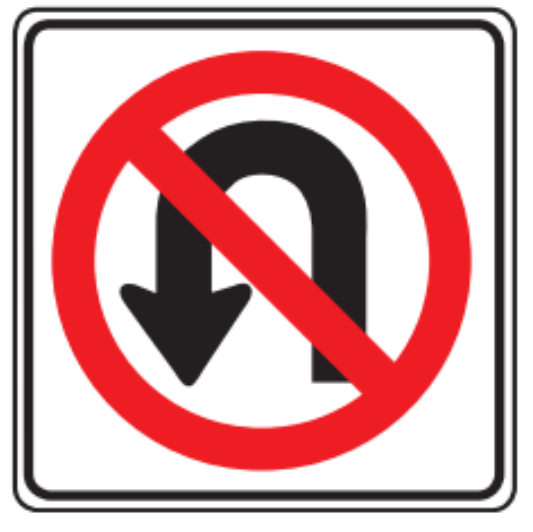
Regulatory sign.
Warning sign.
Information sign.
The No U-Turn sign is a regulatory sign because it instructs drivers that making a U-turn at that location is prohibited. Regulatory signs convey laws and rules that must be obeyed to ensure safe and orderly traffic flow, and violating them may result in fines or penalties.
What equipment is required for bicycles at night?
Side green light visible from 200 feet.
Front white light visible from 300 feet.
Rear blue reflector visible from 100 feet.
A front white light visible from 300 feet is essential for bicycles at night. This light helps the cyclist see the road ahead and ensures they are visible to others.
What should you do if fog becomes too thick to drive safely?
Continue driving slowly.
Increase your speed.
Pull off the road.
When fog becomes too thick to drive safely, you should pull off the road to a safe location. This will help prevent accidents caused by low visibility. 🚗💨
Your speed should depend on what conditions, regardless of the posted speed limit?
Road, weather, traffic, pedestrians, and bicycles conditions.
Traffic level and road conditions.
Weather plus pedestrians and bicycles.
The Basic Speed Law in California mandates that drivers must never drive faster than is safe for the prevailing conditions. These conditions include road conditions, weather, traffic, and the presence of pedestrians or bicycles.
What increases your chance of survival in most collisions?
Airbags in the vehicle reduce injury risk.
Wearing a lap belt and shoulder harness.
Driving at a slower speed to lower impact.
Wearing a lap belt and shoulder harness significantly reduces the risk of injury by keeping you secured in your seat. This prevents ejection and reduces impact with the vehicle's interior during a collision. 💺
What does this sign indicate?
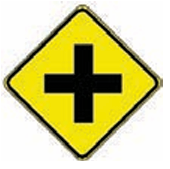
Crossroad.
Hospital.
Railway junction.
This yellow diamond-shaped warning sign indicates a crossroad ahead. Drivers should be alert for intersecting traffic from all directions and be prepared to slow down or yield, ensuring safe passage through the upcoming intersection.
What action is SAFEST upon approach to a roundabout?
Stop before entering.
Signal to enter the roundabout.
Yield to traffic in roundabout.
The safest action upon approaching a roundabout is to yield to traffic already circulating within it. This ensures a smooth and safe flow of traffic, preventing collisions. Think of it like merging onto a highway—you wait for a safe gap. 🚗
What does this sign mean?
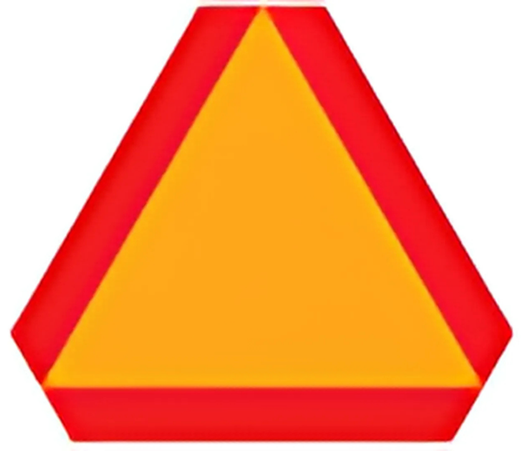
Fast moving vehicle.
Slow moving vehicle.
Army vehicle.
This triangular orange and red sign indicates a slow-moving vehicle, usually traveling 25 mph or less. It alerts drivers to approach with caution, reduce speed if necessary, and be prepared to safely pass the vehicle, preventing accidents and ensuring safe traffic flow.
What does a flashing yellow traffic signal light direct a driver to do?
Stop and proceed when the traffic allows you to proceed safely.
Slow down and proceed with caution.
Stop and wait for a flashing green signal.
A flashing yellow light warns drivers to be alert and careful, but it does not require them to stop before continuing.
What is the penalty for causing serious bodily injury during law enforcement pursuit?
Up to two years in county jail.
Up to ten years in state prison.
Up to seven years in state prison.
The penalty for causing serious bodily injury during law enforcement pursuit is up to seven years in state prison. This reflects the severity of the crime, as it involves both reckless behavior (evading law enforcement) and causing significant harm to another person.
What does this sign signify?
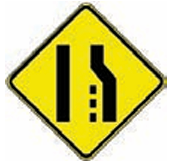
Lane begins; stay in your lane.
Lane ends; merge safely.
Divided highway begins; go fastly.
The Lane Ends sign warns drivers that the lane they are traveling in will end soon. Drivers should safely merge into the adjacent lane, adjust speed if necessary, and yield to traffic already in that lane. This ensures smooth traffic flow and prevents collisions.
What is indicated by two sets of double yellow lines spaced 2 feet or more apart?
Lanes of traffic moving in the same direction.
Barrier.
Carpool/High-Occupancy (HOV) lane.
The correct answer is “Barrier” because two sets of double yellow lines spaced 2 feet or more apart act as a physical divider, meaning you must not drive on or cross them for any reason.
What should you NOT do when another vehicle's lights are too bright?
Keep high-beam headlights on.
Stare directly at the oncoming headlights.
Watch the vehicle out of the corner of your eye.
Keeping your high-beam headlights on will only further impair the vision of the other driver. This could lead to a dangerous situation for both you and the oncoming vehicle. Instead, you should dim your lights and avoid looking directly at the bright lights.
What is a common consequence of failing to appear in court for a traffic ticket?
DMV may suspend driving privilege.
A warrant for your arrest is issued.
Automatic license revocation.
The DMV (Department of Motor Vehicles) often suspends driving privileges for failing to appear in court for a traffic ticket. This is because ignoring a traffic ticket shows a disregard for the law. This consequence encourages compliance with court appearances.
What does a solid yellow traffic light indicate?
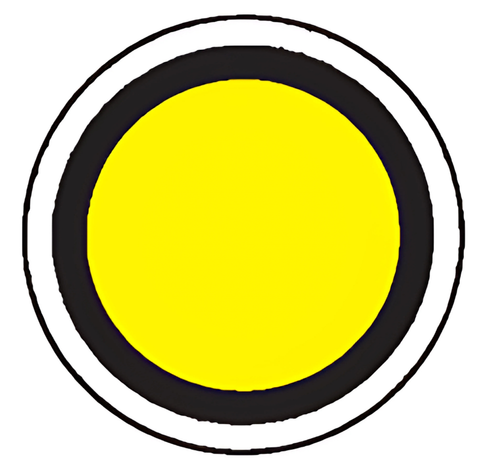
Prepare to stop; the light is about to turn red.
Prepare to go; the light is about to turn green.
Stop immediately, even if already in the intersection.
A solid yellow traffic light indicates that the signal is about to turn red. Drivers should slow down and prepare to stop safely before entering the intersection. This helps prevent collisions and ensures safe traffic flow at controlled intersections.
When should you use the right lane?
To pass other vehicles.
To enter or exit traffic.
When the right lane is clear of traffic.
The right lane is primarily for entering or exiting traffic, allowing vehicles to merge onto or off of a highway or major road safely. This reduces disruption to the flow of traffic in the other lanes. 🛣️
You are required to notify DMV by filing a Report of Traffic Accident Occuring in California (SR-1) form if:
You allowed a licensed driver from another state to drive your vehicle.
You were involved in a collision with more than $1,000 in damages.
You failed to pay your registration fees.
California law requires filing an SR-1 form with the DMV within 10 days if a crash causes over $1,000 in damage, injury, or death.
Which of the following is the proper procedure for parallel parking?
Drive forward into the space without stopping.
Stop next to the vehicle behind the open space, and then drive forward into the space.
Stop next to the vehicle in front of the open space, and then back into the space.
Proper parallel parking requires aligning your car beside the front vehicle first, then carefully reversing into the parking spot while checking mirrors and surroundings.
What is the Freeway Service Patrol (FSP)?
A private towing service contracted by the CHP.
A volunteer organization that helps stranded motorists.
A CHP program that provides free emergency roadside services during commute times in certain areas.
The Freeway Service Patrol (FSP) is a California Highway Patrol (CHP) program that helps drivers by providing free roadside assistance during rush hour in specific metropolitan areas. FSP aims to reduce congestion by quickly clearing incidents.
Parking is NEVER allowed in which of these places?
On a marked crosswalk.
In a green curb zone.
Headed uphill with a curb.
Parking is never allowed on a marked crosswalk because it obstructs pedestrian traffic and visibility, creating a safety hazard. 🚶♀️
When is it permissible to drive in a bicycle lane?
Avoiding traffic.
Passing bicyclists.
Turning within 200 feet.
It is permissible to drive in a bicycle lane when preparing to make a turn within 200 feet of the intersection or driveway. This allows drivers to safely position their vehicle for the turn while minimizing disruption to bicycle traffic. 🚲
What should you expect in a work zone?
Consistent traffic flow.
Higher speed limits.
Sudden slowing or stopping.
In a work zone, sudden slowing or stopping is common due to lane closures, reduced speeds, and the presence of workers and equipment.🚧 Always be prepared to adjust your speed.
What is the ideal maximum speed limit on most California highways, unless otherwise posted?
55 mph.
60 mph.
65 mph.
The maximum speed limit on most California highways is 65 mph, unless otherwise posted. This is the standard limit, but certain roads may have lower or higher posted limits based on traffic conditions and safety.
Why should rear-facing child restraints NOT be in front of airbags?
Because airbag deployment can injure a rear-facing restraint.
Interferes with vehicle sensors.
Reduces airbag effectiveness.
Airbags deploy with significant force 💥. If a rear-facing child restraint is in the path of a deploying airbag, the force can cause serious injury to the child. The airbag is designed for adults, not children in rear-facing restraints.
Considering the legal BAC limits, which scenario poses the greatest DUI risk?
BAC 0.08% for drivers over 21.
BAC 0.01% or higher on DUI probation.
BAC 0.06% for commercial drivers.
A BAC of 0.01% or higher for someone on DUI probation has the greatest DUI risk. This is because any amount of alcohol can be a violation, leading to penalties.