FL ROAD SIGNS TEST: 01 of 01
Free Florida Road Signs Practice Test 1
Learn to recognize Florida road signs, understand their meanings and prepare for your Florida Class E learner’s license knowledge exam with multiple-choice practice questions.
STUDY TOPICS
Road Signs
Warning, regulatory, and all road signs
TEST FORMAT
Question Pool
Multiple-choice road sign questions
YOUR GOAL
Target Pass Mark
Aim for 80% or higher
Before You Start the Florida Traffic Signs Test:
Review the road signs section in the official Florida Driver License Handbook and make sure you know all traffic signs.
How should you use the speed shown on this sign?
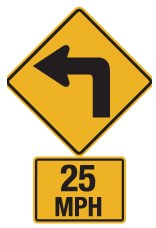
Treat it as the minimum speed in all conditions.
Use it as the speed for the indicated road condition or curve.
Ignore it when the road is clear.
Always drive faster than the posted speed limit.
An Advisory Speed sign recommends a suitable speed for a specific road condition or curve. Slow down when necessary and obey the posted speed limit.
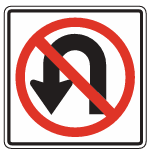
What movement is prohibited by this sign?
Left turns.
Right turns.
U-turns.
Straight-ahead travel.
A No U-Turn sign prohibits turning around to travel in the opposite direction.
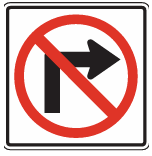
What does this sign prohibit?
Turning left.
Turning right.
Driving straight ahead.
Making a U-turn.
A No Right Turn sign prohibits drivers from turning right at the location indicated.
What should you expect when you see this sign?

One-way traffic ahead.
Two-way traffic ahead.
A divided highway begins.
A dead end ahead.
This sign warns that traffic will travel in both directions ahead. Keep to the correct side of the road.
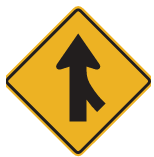
What does this sign indicate?
The road ends ahead.
Traffic lanes merge ahead.
A divided highway begins ahead.
A stop sign is ahead.
This sign warns that traffic from another lane will merge into the roadway ahead. Be alert and adjust your speed and position safely.
What does this sign warn drivers about?
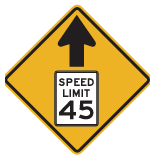
A steep hill ahead.
A sharp curve ahead.
A reduction in the speed limit or required speed ahead.
A road closed ahead.
This sign warns drivers of a speed reduction ahead. Reduce speed as indicated by the sign and road conditions.
What should you do when approaching this sign?
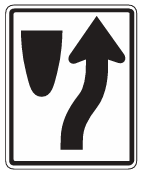
Keep to the right of the divider or obstruction.
Pass on either side of the divider.
Keep to the left of the divider.
Stop and wait for instructions.
A Keep Right sign directs drivers to stay to the right of the divider or obstruction.
What does this sign tell drivers?

Passing is allowed when travelling slowly.
Passing is allowed only at night.
Passing another vehicle is prohibited in the indicated area.
Only trucks may pass other vehicles.
A No Passing sign indicates that passing other vehicles is prohibited in the designated area.
What does this sign mean?
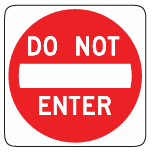
Entry into the road is prohibited.
You must stop before entering.
You may enter only to turn right.
Only trucks are prohibited from entering.
A Do Not Enter sign prohibits entering the road or roadway from that direction.
What does this sign tell drivers at an intersection?
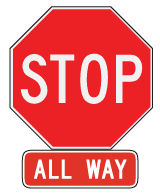
Stop only if another vehicle is present.
Yield to traffic on the right.
All directions of traffic must stop.
Only turning vehicles must stop.
An All Way Stop sign indicates that traffic approaching the intersection from all directions must stop and take turns proceeding.
What should you expect when you see this sign?
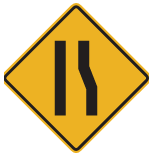
An additional lane begins ahead.
The road becomes one-way.
A lane ends and the number of lanes decreases ahead.
A pedestrian crossing is ahead.
This sign warns that the number of traffic lanes will decrease ahead. Prepare to merge safely into the remaining lane.
What should you prepare for when you see this sign?
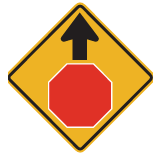
A traffic signal ahead.
A stop sign ahead.
A road closed ahead.
A U-turn ahead.
This sign warns drivers that a stop sign is ahead. Reduce speed and be prepared to stop.
What must you do when you approach this sign?
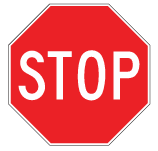
Slow down and proceed without stopping.
Stop completely and proceed when safe.
Give way only to pedestrians.
Increase speed to clear the intersection.
You must come to a complete stop at the stop line or before entering the intersection. Proceed when it is safe.
What should you expect when you see this sign?
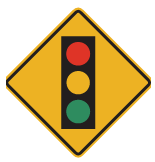
A stop sign at the next intersection.
A railway crossing ahead.
A yield sign ahead.
A traffic signal ahead.
This sign warns drivers that a traffic signal is ahead. Be prepared to slow down and stop if necessary.
What must you do when you see this sign?
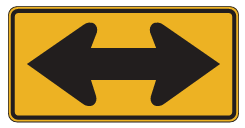
Continue straight ahead.
Stop immediately.
Make a U-turn.
Follow the required turn direction instead of continuing straight.
This sign indicates that you must turn in the permitted direction and cannot continue straight ahead.
What should you do when you see this sign?
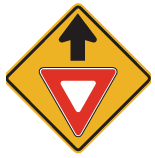
Prepare to give the right-of-way ahead.
Prepare for a traffic signal ahead.
Expect a sharp turn ahead.
Prepare for a railroad crossing.
This sign warns drivers that a Yield sign is ahead. Slow down and prepare to give the right-of-way as required.
What should you do when approaching this sign?
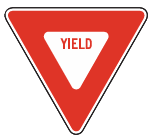
Stop and wait until the road is empty.
Continue without checking other traffic.
Speed up before entering the intersection.
Slow down and give the right-of-way to traffic as required.
A Yield sign means you must slow down and give the right-of-way to traffic or pedestrians as required. Stop if necessary.