Class C Permit Test: 03 of 05
Free California Driving Practice Test 3
Prepare for your California DMV Class C knowledge test (written test) with multiple-choice practice questions covering traffic laws, road signs and safe driving rules.
STUDY TOPICS
Syllabus Covered
California Driver’s Handbook.
TEST FORMAT
Question Pool
Multiple-choice practice questions.
YOUR GOAL
Target Pass Mark
Aim for 80% or Higher.
Before You Start the Test:
Read the official California Driver’s Handbook at least twice, and make sure you know your road signs.
What does this steady yellow arrow show?
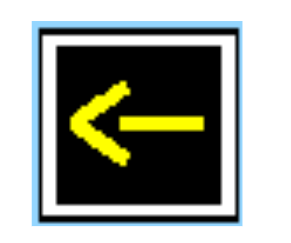
Speed up and turn.
Protected turn ending.
Turn anytime.
A steady yellow arrow indicates that the protected turn phase is ending. Drivers should prepare to stop if it is safe, yield to oncoming traffic and pedestrians, and only proceed when the intersection is clear. This helps prevent collisions and ensures safe turning.
Under what conditions is it legal to have an open container of alcohol in your vehicle?
As a passenger in a bus, taxi, camper, or motorhome.
It is legal only if the driver is not drinking.
It is legal if the container is stored in the glove box.
Having an open container of alcohol is generally illegal in a vehicle. However, there are exceptions. Passengers in vehicles like buses, taxis, campers, or motorhomes are allowed to have open containers. This exception does not extend to the driver of the vehicle.
What following distance is considered safe when driving behind a motorcycle?
Four-second following distance.
Three-second following distance.
Two-second following distance.
A three-second following distance provides adequate space to react to a motorcycle's movements. Motorcycles can stop more quickly than cars, so a greater following distance is crucial for safety. 🏍️
What should you NEVER do when approaching a light rail vehicle?
Check for approaching vehicles.
Maintain a safe distance.
Turn in front of it.
Turning in front of a light rail vehicle is extremely dangerous due to their size and speed. They require a significant distance to stop, making collisions likely if you misjudge the timing. 🚈💥
What is the safest way for adult drivers to use a cell phone while driving?
Speakerphone makes driving safe.
Text while stopped at a red light.
Use hands-free mode only when necessary.
Using a cell phone in hands-free mode is the safest option for adult drivers, but it should only be used when absolutely necessary. This minimizes distractions while still allowing essential communication.
To maximize safety at intersections, drivers should:
Proceed if the light is green.
Look both ways, always.
Yield only to oncoming traffic.
Looking both ways before proceeding ensures that the intersection is clear of any hazards, such as pedestrians, cyclists, or other vehicles, regardless of traffic signals or right-of-way. This practice promotes proactive awareness and helps prevent accidents. 🚦
When is a left turn on red allowed?
At any intersection.
From a two-way street onto a one-way street.
From a one-way street onto a one-way street.
A left turn on red is permitted when moving from a one-way street onto another one-way street, provided there isn't a sign prohibiting it. This rule helps traffic flow efficiently in areas with one-way street systems. Think of it like turning right on red, but in the opposite direction on one-way streets 🚦.
What is the maximum speed when passing a bus, streetcar, or trolley stopped at a safety zone?
15 mph.
10 mph.
20 mph.
The maximum speed for passing a bus, streetcar, or trolley stopped at a safety zone is 10 mph. This reduced speed ensures the safety of pedestrians and passengers.
On a two-lane road with oncoming traffic and a bicyclist on the right, which action sequence is safest?
Slow down, let oncoming traffic pass, then move left to give space to the bicyclist.
Maintain speed and squeeze between the oncoming car and the bicyclist.
Focus only on the oncoming vehicle and ignore the bicyclist.
The safest approach involves prioritizing the safety of all road users. By slowing down and allowing oncoming traffic to clear, you create the opportunity to move left and provide ample space for the bicyclist, reducing the risk of collision.
In a roundabout, which direction does traffic flow?
Clockwise.
Depends on the time of day.
Counter-clockwise.
In a roundabout, traffic is designed to circulate in a counter-clockwise direction. This standard helps to ensure a smooth and orderly flow of vehicles, reducing the likelihood of collisions. Imagine looking at a clock; counter-clockwise is the opposite direction in which the hands move. 🔄
What should you do to make a right turn at an upcoming intersection?
Merge into the bicycle lane before making the turn.
Wait until the bicycle lane ends, then make the turn.
Make the turn from your current lane and do not enter the bicycle lane.
The correct answer is “Merge into the bicycle lane before making the turn” because California law requires drivers to enter the bicycle lane within 200 feet of the intersection to make a safe and legal right turn.
What is the typical marking for bicycle lanes?
Broken white line.
Double solid white line.
Single solid white line.
A single solid white line is commonly used to designate bicycle lanes on roadways. This marking indicates that the lane is primarily for cyclists, but drivers may cross it to enter or exit the roadway. 🚴
What does this sign signify?
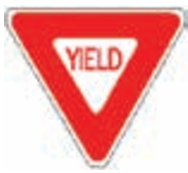
Slow down and be ready to stop.
Slow down and be ready to go.
Speed up to merge.
A red YIELD sign means you must reduce speed and prepare to stop if necessary, allowing other vehicles, bicyclists, or pedestrians to go first. You do not always have to stop completely unless traffic requires it. This ensures safe merging or crossing.
Which of the following is illegal while driving?
Wearing a headset or ear plugs that covers both ears.
Wearing a headset or ear plugs that covers one ear.
Using cruise control on residential streets.
The correct answer is “Wearing a headset or ear plugs that covers both ears” because California law prohibits drivers from wearing devices that block both ears, as it prevents them from hearing emergency sirens and surrounding traffic.
What does this sign represent?
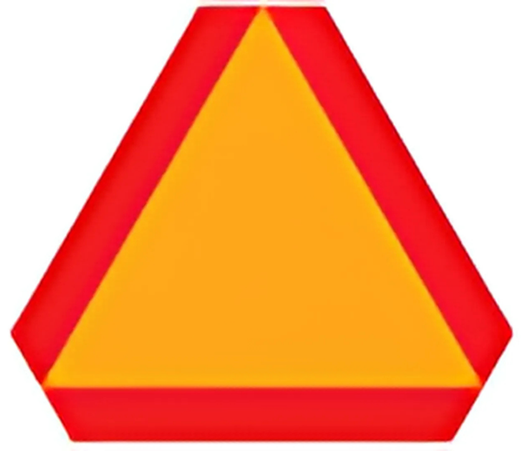
Vehicle moves above 25 mph.
Vehicle moves under 25 mph.
Vehicle moves with no speed limit.
This triangular orange sign with a red border is used to mark slow-moving vehicles, such as farm equipment or construction machinery, that travel at 25 mph or less. When approaching such vehicles, drivers must reduce speed, maintain a safe distance, and pass cautiously.
What action BEST ensures safety before exiting a parallel parked car?
Check for passing vehicles.
Look for pedestrians after stepping out.
Rely only on mirrors.
Checking for passing vehicles before exiting a parallel parked car is crucial. This action helps prevent collisions with cars, motorcycles, or bicycles that may be approaching. This ensures your safety and the safety of others.
When approaching a yield line, which action is required by drivers?
Yield or stop if necessary.
Merge without yielding.
Always stop completely.
The correct action when approaching a yield line is to yield the right-of-way to other traffic and stop if it is necessary to avoid a collision. This ensures safety and adherence to traffic laws.
What action should you take at a STOP sign?
Come to a complete stop.
Stop if traffic is there.
Yield and proceed.
The correct action at a STOP sign is to come to a complete stop. This ensures you can properly assess cross-traffic and pedestrians before proceeding safely.👮♀️
What does a blue painted curb indicate?
Parking is not allowed at any time.
Parking for a disabled person.
Parking only for emergency vehicles.
A blue curb means the space is reserved for disabled persons or for drivers transporting disabled persons who display a valid disabled person placard or special license plate. Parking in these spaces without proper authorization can result in heavy fines.
What does this sign signify?

Divided highway ends.
Divided highway begins.
Road narrows ahead.
This sign indicates that a divided highway is about to begin, with a physical barrier or median separating traffic moving in opposite directions. Drivers should remain in their lane, avoid sudden lane changes, and be alert when adjusting to the new road layout.
Which of the following is a requirement of California’s Basic Speed Law?
Always drive the speed limit, regardless of conditions.
Match your speed to that of your surrounding traffic.
Never drive faster than is safe for current conditions.
The correct answer is “Never drive faster than is safe for current conditions” because California’s Basic Speed Law requires drivers to adjust their speed based on traffic, weather, and road conditions, even if it is lower than the posted speed limit.
In addition to setting your parking brake, what should you do when parking on a hill?
Make sure the front vehicle wheels are parallel to the road.
Make sure your vehicle is left in the “neutral” position.
Make sure your vehicle is in the “park” position or in gear.
The correct answer is “Make sure your vehicle is in the ‘park’ position or in gear” because when parking on a hill, this prevents your car from rolling if the parking brake fails.
As an adult, your license may be suspended if your driver’s record shows:
8 points in 36 months.
6 points in 36 months.
4 points in 36 months.
Traffic convictions and collisions stay on your record for 36 months or longer, depending on the type of conviction. As an adult, your license may be suspended if your driver’s record shows one of the following point totals: 1) 4 points in 12 months. 2) 6 points in 24 months. 3) 8 points in 36 months.
How should a pregnant woman position a lap belt for safety?
High across the breasts.
Tight across the abdomen.
Low under the abdomen.
The lap belt should be positioned low under the abdomen and across the upper thighs to protect both the mother and the fetus during a collision. This placement avoids direct pressure on the uterus. 🤰
What does this sign indicate?

Restricted Zone.
Railroad crossing ahead.
Four roads crossing ahead.
This sign warns that a railroad crossing is coming up. Drivers must slow down, look both ways, listen for approaching trains, and be ready to stop if necessary. Observing these precautions helps prevent accidents and ensures the safety of all road users.