Class C Knowledge Exam: 03 of 05
Free Texas DPS Driving Practice Test 3
Prepare for your Texas DPS Class C knowledge exam (TX driver license written test) with multiple-choice practice questions covering rules of the road, road signs and signals and safe driving practices.
STUDY TOPICS
Syllabus Covered
Texas Driver Handbook.
TEST FORMAT
Question Pool
Multiple-choice practice questions.
YOUR GOAL
Target Pass Mark
Aim for 70% or Higher.
Before You Start the Test:
Read the official Texas Driver Handbook at least twice, and make sure you know your road signs.
What does this sign indicate?
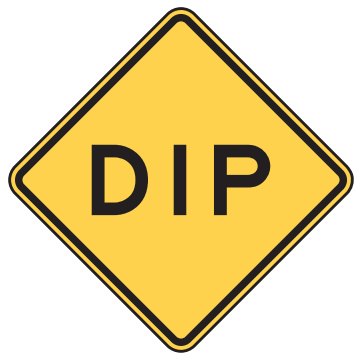
Steep incline begins.
Low place in the road ahead.
Sudden high place ahead.
Uneven road surface ahead.
This warning sign indicates a dip or low spot in the road. Drivers should slow down to avoid losing control or experiencing a jolt. Being aware of the dip helps maintain vehicle stability and ensures passenger safety.
If a driver reacts half a second slower due to distraction, crashes will:
Double.
Increase by 50%.
Stay the same.
Triple.
A half-second delay greatly reduces a driver’s ability to respond to sudden hazards. Even this small slowdown sharply increases stopping distance and reduces control, causing crash rates to double. This shows how dangerous even brief distractions can be while driving.
The Class C knowledge exam is for:
Applicants over 25.
All original applicants.
Motorcycle operators.
Class A/B vehicle operators.
The Class C knowledge exam is specifically designed for all original driver's license applicants to assess their understanding of traffic laws and safe driving practices.
When turning left, you must yield to:
Pedestrians in the crosswalk.
Vehicles from the right.
Vehicles already in the intersection.
Vehicles coming straight through.
During a left turn, the driver must yield to oncoming traffic traveling straight. These vehicles have the right-of-way because they maintain their direction of travel, and yielding prevents angle collisions at intersections, ensuring safer and smoother traffic flow.
Minimum audible distance for a vehicle’s horn in Texas:
100 feet.
200 feet.
300 feet.
500 feet.
Texas law requires a vehicle’s horn to be heard from at least 200 feet. This ensures the horn provides adequate warning to other road users, giving them enough time to react and helping prevent collisions in various traffic situations.
Braking distance refers to the:
Distance to perceive a hazard.
Driver’s reaction time.
Length of the vehicle.
Distance from brake application to a stop.
Braking distance is the space a vehicle travels after the brakes are applied until it fully stops. It depends on speed, road surface, tire condition, and weather. Understanding braking distance helps drivers maintain safe following gaps and avoid collisions.
In Texas, when must law enforcement be notified after a crash?
When there is an injury or fatality.
When damage is under $1,000.
When only property damage occurs.
When vehicles can be moved.
Texas law requires notifying law enforcement if a crash results in injury or death. Immediate reporting allows proper medical help, documentation, and investigation. This ensures accurate assessment of the incident and supports legal and safety requirements at the crash scene.
How should a driver adjust speed and distance on a wet road?
Keep the posted speed.
Keep normal distance.
Increase speed slightly.
Slow down and increase distance.
Wet roads reduce tire traction, making it harder to stop or steer quickly. Slowing down improves control, and increasing following distance provides extra space for safe braking. These adjustments help prevent skidding, hydroplaning, and rear-end collisions in reduced-traction conditions.
In Texas, passing on the right is specifically allowed:
On any multi-lane road.
On any paved shoulder.
On a one-way road.
When the vehicle ahead is slow.
Passing on the right is permitted on a one-way road because all lanes travel in the same direction, reducing the risk of conflict with oncoming traffic. This rule ensures safer overtaking and prevents improper use of shoulders or unsafe lane maneuvers.
Which arm signal is used to indicate a stop?
Both arms extended horizontally.
Left arm pointed upward.
Left arm pointed downward.
Right arm pointed upward.
A driver signals a stop by extending the left arm downward, a clear and universally recognized gesture. This hand signal helps alert following vehicles of your intention to slow or stop, reducing the chances of rear-end collisions and improving road communication.
To make a safe turn, what action is essential?
Braking or using the clutch while turning.
Speeding up to merge quickly.
Signaling at least 100 feet before turning.
Using one hand on the wheel.
Giving a turn signal at least 100 feet in advance alerts nearby drivers and pedestrians to your intended movement. This early warning reduces sudden surprises, helps maintain smooth traffic flow, and significantly lowers the risk of collisions.
Under Texas law, what is a minor NEVER allowed to do with alcohol?
Attempt to purchase an alcoholic beverage.
Consume an alcoholic beverage.
Purchase an alcoholic beverage.
Possess an alcoholic beverage.
Texas law clearly prohibits minors from possessing any alcoholic beverage. Possession itself is a direct violation under the Texas Alcoholic Beverage Code, making it strictly illegal regardless of circumstances. This rule helps prevent underage access, use, and distribution of alcohol.
What does this sign mean?
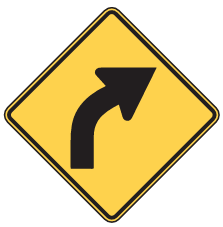
Winding road ahead.
Sharp curve ahead.
Gradual curve ahead.
Sharp dip ahead.
This sign indicates the road ahead curves gradually in the direction of the arrow. Drivers should reduce speed, stay in the right lane, and avoid passing to safely follow the curve and maintain control of the vehicle.
What are the first steps to begin parallel parking?
Check blind spots, then signal and stop.
Pick a space, signal, and stop beside the front car.
Honk and move slowly.
Wait for the front car to leave.
Parallel parking begins by selecting a suitable space, signaling clearly, and stopping parallel to the vehicle ahead of the spot. This position gives enough room to enter the space smoothly while alerting nearby drivers and pedestrians to your intended maneuver.
A pedestrian approaching an intersection with a red traffic signal should:
Cross diagonally.
Obey the traffic signal.
Cross against the red light.
Yield to oncoming vehicles.
Pedestrians must follow traffic signals to ensure safe movement through intersections. A red signal means they should not cross, preventing conflicts with vehicles and reducing accident risk. Obeying the signal maintains order and protects both pedestrians and drivers.
Color-blindness is mainly characterized by:
Blurry vision.
Inability to distinguish colors.
Poor night vision.
Sensitivity to bright lights.
Color-blindness affects how the eyes detect and differentiate colors. People with this condition often confuse certain color combinations because the cones in the retina do not function normally. This results in difficulty identifying specific hues rather than reduced clarity or brightness.
What does this sign signify?

A railroad crossing.
A cross road.
A crosswalk.
A blasting zone.
This sign warns drivers that a railroad crossing is ahead. It is designed to alert motorists to slow down, watch for trains, and be prepared to stop if necessary, ensuring safety at rail intersections.
In driving, right-of-way is defined as:
A legal entitlement.
Determined by vehicle size.
Negotiated between drivers.
Something given, not taken.
Right-of-way is given, not taken, meaning drivers should yield to others even if they technically have the right-of-way to avoid accidents. This promotes safety and cooperation on the road.
What is the effect of stimulants on driving skills?
Effect only on drowsy drivers.
Reduce driver coordination.
Improve coordination and focus.
No effect on driving ability.
Stimulants, especially stronger forms like amphetamines, can impair coordination and judgment even if they increase alertness. This loss of control raises the chance of crashes because fine motor skills and proper reaction timing become less reliable while driving.
To avoid road rage, how should you use your horn?
Tap the horn.
Make obscene gestures.
Hold the horn down.
Yell at other drivers.
Tapping the horn provides a brief, non-aggressive signal that communicates your presence without provoking anger. Holding the horn or reacting emotionally can escalate tension on the road. A light tap helps maintain calm, safe interactions with other drivers.
Penalty for a second conviction of driving without financial responsibility:
A fine of $175 to $350.
Mandatory driving safety course.
Suspension of driver license.
Vehicle impoundment for 30 days.
A second violation for driving without required financial responsibility leads to a license suspension. This consequence encourages drivers to maintain valid insurance, reduces repeat offenses, and helps promote safer and more responsible driving habits on public roads.
Guide signs are most helpful when:
At night.
During rush hour.
You are not familiar with an area.
In construction zones.
Guide signs provide directions, route markers, and location information that help drivers navigate unfamiliar areas. They reduce confusion, support safer decision-making, and allow drivers to reach destinations efficiently without relying solely on maps or electronic navigation.
What is an important safety tip for winter driving?
Increase distance from the vehicle ahead.
Driving with snow on your car is fine.
Keep a safe speed range.
Test brakes before moving.
Winter roads can be icy, greatly increasing the distance needed to stop safely. Leaving extra space gives more reaction time and reduces the risk of sliding into the vehicle ahead. This precaution helps prevent rear-end crashes during cold-weather driving.
Required action when white stop lines are present:
Slow down and proceed with caution.
Stop only if pedestrians are present.
Stop only during peak traffic hours.
Stop behind the stop line.
White stop lines indicate the exact point where vehicles must stop at signs or signals. Stopping behind the line keeps crosswalks clear, prevents blocking intersections, and ensures drivers maintain proper visibility and comply with traffic control rules.
What is the top speed of a Neighborhood Electric Vehicle (NEV)?
35 mph.
25 mph.
45 mph.
55 mph.
By federal definition (Federal Motor Vehicle Safety Standard 500), a Neighborhood Electric Vehicle (NEV) must have a maximum speed of 35 mph on a paved, flat surface. This speed limit helps NEVs operate safely in residential and low-speed areas.