Class E Knowledge Exam: 03 of 03
Free Florida Driving Practice Test 3
Prepare for your Florida Class E knowledge exam (FL driver license written test) with multiple-choice practice questions covering Traffic laws, Safe driving practices and Identifying traffic controls.
STUDY TOPICS
Syllabus Covered
Florida Driver License Handbook.
TEST FORMAT
Question Pool
Multiple-choice practice questions.
YOUR GOAL
Target Pass Mark
Aim for 80% or Higher.
Before You Start the Test:
Read the official Florida Driver License Handbook at least twice, and make sure you know your road signs.
What is the main safety concern of “No Zones” around CMVs?
CMV driver cannot see vehicles.
Dangerous only during CMV turns.
Only risky when passing a CMV.
Safe to enter if you honk.
“No Zones” are large blind spots around commercial motor vehicles where smaller vehicles become invisible to the CMV driver. Staying out of these areas reduces collision risk and improves overall road safety.
Which feature is considered a Collision Warning System?
Automatic Emergency Braking.
Adaptive Cruise Control.
Blind Spot Warning.
Lane Centering Assistance.
A Blind Spot Warning system alerts drivers to vehicles in nearby lanes that may be hidden from view. It helps prevent side collisions during lane changes by warning the driver through visual or audible alerts.
What does a single solid white line on a roadway indicate?
Allows lane changes.
Discourages lane changes.
Marks roadway edge.
Separates opposing traffic.
A single solid white line means lane changes are discouraged but not illegal. It marks lanes moving in the same direction and advises drivers to stay in their lane unless necessary to avoid a hazard.
What are the mandatory penalties for a first DUI conviction in Florida?
Community service and probation.
Fine, DUI school, imprisonment, and probation.
Fine and license revocation only.
Fine, DUI school, and license revocation.
A first DUI conviction in Florida carries mandatory penalties including a fine, completion of DUI school, and license revocation. These penalties aim to discourage impaired driving and promote safer road behavior.
The Move Over Law in Florida protects which group of people?
Disabled vehicles and sanitation workers.
Emergency vehicles and construction vehicles.
Law enforcement, emergency workers, and tow trucks.
Only law enforcement officers.
Florida’s Move Over Law protects law enforcement, emergency responders, and tow truck operators stopped with flashing lights. Drivers must move over one lane or slow 20 MPH below the limit if changing lanes isn’t possible.
What type of traffic sign is shown below?
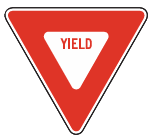
Regulatory sign.
Warning sign.
Guide sign.
Information sign.
The Yield sign is a regulatory sign that instructs drivers to slow down and give right-of-way to other vehicles or pedestrians. If the road is clear, drivers may proceed slowly without stopping, ensuring smooth traffic movement.
What type of traffic sign is shown below?

Warning sign.
Regulatory sign.
Guide sign.
Information sign.
The Roundabout Circle sign is a warning sign that alerts drivers to an upcoming roundabout. It advises slowing down and being ready to yield to vehicles already in the circle, ensuring safe and controlled entry.
What does this flashing yellow arrow indicate to drivers?
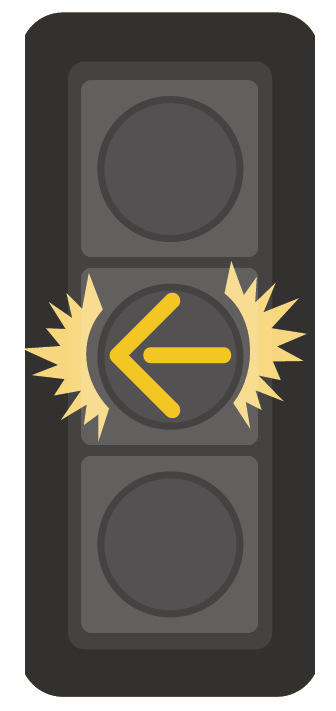
Turns allowed after yielding to traffic and pedestrians.
Turns allowed after stopping completely.
Turns prohibited until arrow turns green.
Turns allowed after yielding to vehicles only.
A flashing yellow arrow means drivers may turn in the indicated direction after yielding to both oncoming traffic and pedestrians. It does not require a full stop or waiting for a green arrow, but drivers must proceed cautiously.
Why should you avoid using high beams in fog or heavy rain?
Backscatter reduces visibility.
Low beams lack power.
Only effective above 25 MPH.
Too bright for close range.
High beams in fog or heavy rain reflect off water droplets, creating backscatter that shines light back into the driver’s eyes. This glare reduces visibility, making low beams the safer choice in such conditions.
How many driving hours must under-18 drivers complete in Florida?
20 hours including 10 at night.
30 hours including 5 at night.
50 hours including 10 at night.
50 hours no night requirement.
Florida requires under-18 drivers to finish 50 hours of supervised driving, including 10 at night, before getting a license. This ensures they gain enough practice and confidence in both day and night conditions.
On a divided highway, what should you do if a school bus stops opposite you?
Proceed with caution.
Stop until stop signal.
Stop if children present.
Stop when loading or unloading.
When a raised divider separates lanes, drivers moving opposite a stopped school bus may proceed carefully. The divider ensures children cannot cross, so stopping isn’t necessary in this case.
Which type of traffic signs are usually yellow and diamond-shaped?
Construction signs.
Warning signs.
Regulatory signs.
Guide road signs.
Warning signs are yellow and diamond-shaped, alerting drivers to upcoming road conditions or hazards. They help drivers prepare for curves, intersections, or other unexpected situations requiring extra caution.
What is the main purpose of a vehicle’s brake lights?
Indicate reverse gear.
Indicate braking.
Signal a turn.
Show license plate.
Brake lights alert drivers behind that a vehicle is slowing or stopping. This early warning helps prevent rear-end collisions and ensures safer following distances in all driving conditions.
Can you pass when the double yellow line is broken on your side?
No, passing never permitted.
No, only left turns allowed.
Yes, passing permitted both directions.
Yes, passing permitted when safe.
A double yellow line broken on your side allows passing when safe. The solid line on the opposite side means vehicles there cannot pass. Always check for clear visibility before overtaking.
Which action within one year can lead to license revocation in Florida?
Accumulating 24 license points.
Failure to pay child support.
Three reckless driving convictions.
Refusing a breath or blood test.
In Florida, three reckless driving convictions within one year result in license revocation, meaning driving privileges are permanently terminated. Revocation is more severe than suspension and requires reapplication to regain driving rights.
Minimum age to obtain a Learner's License in Florida:
16 years old.
17 years old.
18 years old.
15 years old.
In Florida, individuals must be at least 15 years old to apply for a Learner’s License. They must also complete a Traffic Law and Substance Abuse Education course and pass vision, hearing, and knowledge tests before issuance.
What does this road sign indicate?
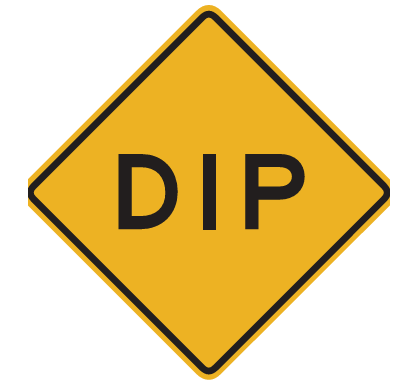
Sudden steep hill ahead.
Low place in the road.
High place in the road.
Uneven surface ahead.
The Dip sign warns of a low section on the road that may hold water. Drivers should slow down and be prepared to stop or turn around if it’s flooded.
What does this sign indicate?
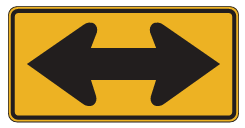
You may continue straight ahead.
You may turn only if safe.
Turning is not allowed.
You must turn right or left only.
This Must Turn sign tells drivers they cannot continue straight through the intersection. Vehicles must turn either right or left as indicated, ensuring smooth and safe lane movement where straight travel is restricted.
What is the maximum front bumper height for cars weighing 2,500–3,499 lbs?
22 inches.
24 inches.
26 inches.
27 inches.
In Florida, passenger cars weighing between 2,500 and 3,499 pounds may have a maximum front bumper height of 24 inches. This rule ensures safety and uniformity in vehicle design to reduce collision impact risks.
What Blood Alcohol Level makes under-21 drivers take a TLSAE course?
0.00
0.05
0.08
0.02
In Florida, drivers under 21 with a BAL of .02 or higher face a six-month suspension and must complete a Traffic Law and Substance Abuse Education (TLSAE) course before regaining their driving privileges.
What test is required to obtain an original Florida driver license?
Class E knowledge exam.
Driving Skills Test.
Vision and hearing test.
Written retest exam.
To get an original Florida driver license, applicants must pass a Driving Skills Test. This test ensures they can operate a vehicle safely and demonstrate control, signaling, and awareness of traffic rules.
What is the replacement fee for a Florida driver license or ID card?
$48.
$15.
$6.25.
$25.
In Florida, the fee to replace a lost or stolen driver license or ID card is $25. This standard charge applies to both duplicates and replacements issued through the Department of Highway Safety and Motor Vehicles.
Is a four-second following distance enough during a rainstorm with low visibility?
No, insufficient for rainstorm.
No, but adequate on wet roads.
Yes, adequate in all conditions.
Yes, if driver can see ahead.
During heavy rain or low visibility, a four-second gap isn’t enough. Drivers should increase following distance to improve reaction time and prevent skidding or rear-end collisions on slippery roads.
What is the maximum imprisonment for a third DUI in Florida?
Not more than 9 months.
Not more than 6 months.
Not more than 12 months.
Up to 1 year imprisonment.
A third DUI conviction in Florida can result in imprisonment of up to 12 months. This severe penalty is meant to deter repeat offenders and reinforce the importance of responsible driving.
When entering a roundabout, who must drivers yield to?
Pedestrians crossing the exit path.
Traffic that is exiting the roundabout.
Traffic already in the roundabout.
Vehicles stopped within the roundabout.
Drivers entering a roundabout must yield to vehicles already circulating inside. This keeps traffic flowing smoothly, prevents crashes, and ensures vehicles within the roundabout have the right of way.