Permit Test: 03 of 05
Free New York DMV Written Driving Practice Test 3
Prepare for your New York learner permit knowledge test with practice questions covering the rules of the road, safe driving techniques, road signs and the laws about alcohol and drug use while driving.
STUDY TOPICS
Syllabus Covered
New York Driver’s Manual and Road Signs.
TEST FORMAT
Question Pool
Multiple-choice practice questions.
YOUR GOAL
Target Pass Mark
Aim for 70% or higher.
Before You Start the Test:
Read the official New York State Driver’s Manual at least twice, and make sure you know your road signs.
When passing another vehicle, you should
Pass whenever you are in a hurry.
Ignore oncoming traffic.
Drive onto the shoulder.
Check that passing is allowed and safe.
Passing is permitted only when it is legal and can be done safely. You must have enough space and time and must not interfere with oncoming or other traffic. Driving on the shoulder to pass is generally not permitted.
When may you turn right at a steady red light?
Always, without stopping.
After a full stop and when it is safe.
Only when another driver waves you through.
Never in New York State.
In most of New York State, you may turn right on red after a full stop and after yielding to traffic and pedestrians, unless a sign or other control prohibits the turn. In New York City, right turns on red are not permitted unless a sign specifically allows them.
You are turning left at an intersection and an approaching vehicle is going straight. Who has the right-of-way?
The vehicle turning left.
The larger vehicle.
The approaching vehicle going straight.
The vehicle that arrived second.
A driver turning left must yield to oncoming traffic that is close enough to be a hazard. The approaching vehicle going straight has the right-of-way in this situation.
What is a good way to avoid driving while tired?
Drink alcohol before driving.
Drive faster to arrive sooner.
Take a break and rest when needed.
Open a window and continue for hours.
Fatigue can reduce attention and reaction time. If you are very tired, stop driving and rest. The NY manual advises drivers not to drive when they are very weary.
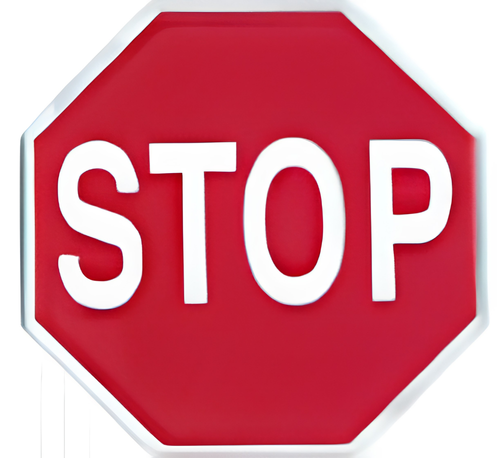
What should you do at a STOP sign?
Slow down and continue if the road is clear.
Speed up to clear the intersection.
Stop only if another vehicle is coming.
Stop completely and yield before going.
A STOP sign requires a full stop. Stop before the stop line, crosswalk, or intersection, as required. Then yield to vehicles and pedestrians and go when it is safe. Simply slowing down is not enough.
What does a flashing red traffic light mean?
Stop, then go when it is safe.
Slow down and continue.
Stop only when pedestrians are present.
Continue without stopping.
A flashing red light is treated like a STOP sign. You must stop, yield the right-of-way, and continue only when it is safe. A flashing yellow light means drive with caution, not stop.
What should you do if you are involved in a traffic crash?
Leave immediately if the damage is small.
Stop and take the required steps.
Move away without exchanging information.
Continue driving if nobody is injured.
New York law requires a driver involved in a crash to stop. The required actions depend on the circumstances, including exchanging information and reporting the crash when required. The amount of vehicle damage does not remove the duty to stop.
What does a yellow diamond-shaped traffic sign normally warn you about?

Parking rules.
A service area.
A hazard or special road condition.
A destination.
Warning signs are normally yellow and diamond-shaped. They warn drivers about hazards or changing road conditions ahead. Green signs generally give destination information, while blue signs show services.
What should you do before changing lanes?
Check mirrors and blind spots, and signal.
Only look in the rearview mirror.
Speed up without signaling.
Turn the steering wheel first.
Before changing lanes, check your mirrors and blind spots, signal, and make sure the lane is clear. A signal tells other drivers what you plan to do, but it does not give you the right to move into an occupied lane.
What do double solid yellow lines mean?

Passing is allowed in both directions.
Passing is not allowed across the lines.
Only trucks may cross the lines.
You must change lanes.
Double solid lines generally mean you cannot pass or change lanes across the lines. You may cross them in situations allowed by the manual, such as making a left turn to enter or leave the highway.
When should you signal before making a turn?
Only after you start turning.
Only if another vehicle is nearby.
Before the turn.
After completing the turn.
You should signal before turning so other road users have time to understand your intention. Signaling after you begin the turn does not give other drivers enough warning.
What should you do if you begin to skid on a slippery road?
Brake hard immediately.
Accelerate quickly.
Turn the steering wheel sharply from side to side.
Steer in the direction you want the vehicle to go.
Avoid sudden movements. When a vehicle starts to skid, stay calm and steer in the direction you want the vehicle to travel. Sudden braking, acceleration, or steering can make the skid worse.
What should you do when approaching a school bus that has stopped with red lights flashing?
Pass the bus carefully.
Honk and continue.
Drive around it if no children are visible.
Stop as required by law.
When a school bus is stopped with its red signal lights flashing, drivers must stop as required by New York law. Do not assume it is safe to pass because you cannot see children.
At an intersection, who must yield when one vehicle is already in the intersection?
The vehicle approaching the intersection.
The vehicle already in the intersection.
The vehicle traveling faster.
The vehicle on the left.
A driver approaching an intersection must yield to traffic already in the intersection. Do not assume you can go first just because you have a green light; turning drivers may still need to yield.
What does one broken line between lanes mean?
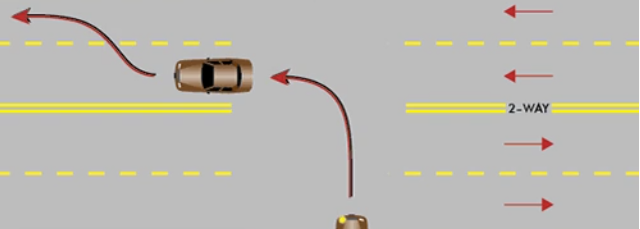
You may change lanes or pass if it is safe.
You may never cross the line.
Only emergency vehicles may cross it.
The lane is for parking only.
A broken lane line means you may pass or change lanes when it is safe and you do not interfere with other traffic. Always check traffic before moving.
If a police officer tells you to go through a red light, what should you do?
Wait for the light to turn green.
Turn around.
Honk and remain stopped.
Follow the officer's direction.
Directions from a traffic officer take precedence over traffic lights, signs, and pavement markings. You must follow the officer's lawful direction even if it differs from the traffic signal.
What should you do if a pedestrian is crossing at a marked or unmarked crosswalk?
Speed up before the pedestrian reaches your lane.
Yield to the pedestrian.
Honk until the pedestrian moves.
Pass another vehicle stopped at the crosswalk.
New York drivers must yield to pedestrians at crosswalks when required by law. Never pass a vehicle that has stopped for a pedestrian at a crosswalk because you may not see the pedestrian.
Why should you leave enough space between your vehicle and the vehicle ahead?
To allow more time to react.
To make other drivers pass you.
To use more fuel.
To avoid using your brakes.
A safe following distance gives you more time to react if the vehicle ahead stops or slows suddenly. Tailgating reduces your reaction time and increases the risk of a crash.
What does a flashing yellow traffic light mean?

Stop and wait for a green light.
Stop and yield like a STOP sign.
Drive with caution.
Speed up before the light changes.
A flashing yellow light means proceed with caution. You do not have to stop unless another rule or traffic condition requires you to stop. A flashing red light requires a stop.
Which action is safest when driving in heavy rain?
Drive faster to get through it.
Reduce speed and increase following distance.
Use high speed and follow closely.
Turn off your headlights.
Rain can reduce visibility and make the road slippery. Reduce speed, allow more space between vehicles, and use your headlights when appropriate. Following closely gives you less time to react.