Class C Permit Test: 01 of 05
Free California Driving Practice Test 1
Prepare for your California DMV Class C knowledge test (written test) with multiple-choice practice questions covering traffic laws, road signs and safe driving rules.
STUDY TOPICS
Syllabus Covered
California Driver’s Handbook.
TEST FORMAT
Question Pool
Multiple-choice practice questions.
YOUR GOAL
Target Pass Mark
Aim for 80% or Higher.
Before You Start the Test:
Read the official California Driver’s Handbook at least twice, and make sure you know your road signs.
Which lights should be used if a driver is having trouble seeing other vehicles because of dust or smoke blowing across the roadway?
Parking lights.
Emergency lights.
Headlights.
When dust or smoke reduces visibility, you should turn on your headlights (not parking or emergency lights) so other drivers can see you more easily. This improves safety for both you and other vehicles on the road.
How far can you drive in a center left turn lane?
500 feet.
Until the next intersection.
200 feet.
You can only drive 200 feet in a center left turn lane. This helps prevent misuse as a regular travel lane. It is designed for short distances.
Where should the lap belt be positioned?
Across the stomach.
High around the waist.
Snug, low across the hips.
The lap belt should be snug and low across the hips to properly restrain you in a collision. This position ensures the force is applied to the strong pelvic bones, minimizing injury.
What is the minimum age for a child to require supervision in a vehicle?
6 years old.
8 years old.
10 years old.
Children under 6 years old cannot be left alone in a vehicle unless supervised by someone at least 12 years old. This law is meant to protect young children from danger while unattended.
What should you do if you see a vehicle's emergency flashers ahead of you on the road?
Maintain your current speed and lane position.
Speed up to get past the hazard quickly.
Slow down and pass carefully.
When you see a vehicle's emergency flashers 🚨, it indicates a potential hazard. Slowing down allows you to assess the situation, and passing carefully ensures you avoid any incident. This approach prioritizes safety for everyone involved.
What does this sign mean?
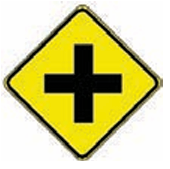
Four-way stop ahead.
Crossroad ahead.
One-way junction ahead.
This sign warns a crossroad is ahead where another road crosses, so drivers should be alert for traffic entering from both sides.
When approaching a yellow traffic light, which action is SAFEST?
Stop safely before the intersection.
Maintain speed and proceed cautiously.
Speed up to clear the intersection.
The safest action is to stop before the intersection if you can do so safely. This avoids the risk of entering the intersection when the light turns red 🚦 and potentially colliding with other vehicles.
When should you check your blind spots?
Before changing lanes.
While driving straight.
When accelerating quickly.
You should check your blind spots before changing lanes to ensure there are no vehicles or objects in the adjacent lane that are not visible in your mirrors. This helps prevent accidents. 🚗
What does this sign represent?
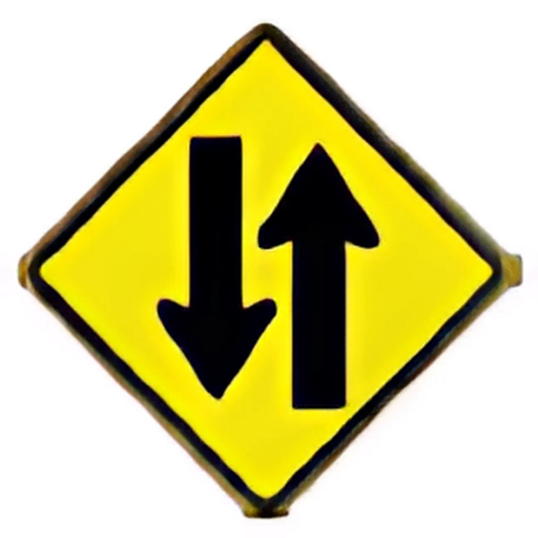
Divided highway ahead.
One-way street ahead.
Two-way traffic ahead.
This sign warns drivers that traffic flows in both directions ahead, so they should stay alert and drive cautiously.
What does this sign indicate?
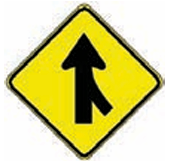
Merging traffic ahead.
Road narrows ahead.
Lane ends ahead.
This sign warns two lanes will merge into one, so drivers should adjust speed and allow others to merge safely.
When are you allowed to pass on the right?
Anytime it is safe to do so.
When the left lane is slower.
Open highway, driver ahead turning.
Passing on the right is typically allowed on an open highway or when the vehicle you are passing is making a left turn, provided there is sufficient space and it is safe to do so.
What action should you take at a flashing yellow light?
Stop, unless unsafe.
Proceed with caution.
Stop completely.
A flashing yellow light indicates that you should proceed with caution. You do not need to stop, but you should be aware of your surroundings and watch for other vehicles or pedestrians. ⚠️
What does this sign represent?
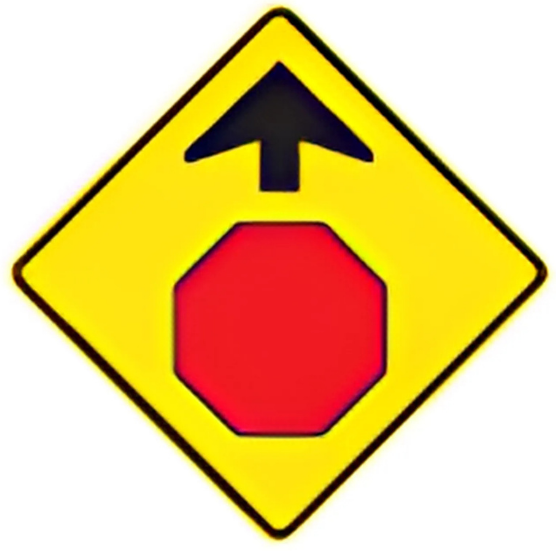
Signalized intersection.
No stopping zone.
Stop ahead
This sign warns drivers that a stop sign is coming up, so they should begin to slow down and prepare to stop completely.
What does this sign indicate?
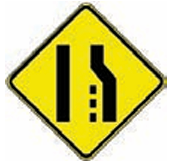
Lane ends ahead.
Narrow bridge ahead.
Roadwork ahead.
This sign warns that a lane is ending soon, so drivers should prepare to merge safely into the adjacent lane.
After purchasing a vehicle, how many days do you have to transfer ownership into your name?
15 days.
10 days.
The DMV automatically handles the transfer.
You have 10 days from the date of purchase to transfer the vehicle's ownership into your name. This ensures legal responsibility is properly assigned. Failing to do so within this timeframe can result in penalties.
What should you do before changing lanes on a roadway?
Signal, check mirrors, check blind spots.
Speed up, then change lanes.
Slow down, then change lanes.
Before changing lanes, it's crucial to communicate your intention (signal), assess the surrounding traffic (check mirrors), and ensure there are no vehicles in your hard-to-see areas (check blind spots) to avoid collisions. 🚗➡️
What should you do if you must stop on a freeway?
Activate hazard lights.
Park completely off the pavement.
Stop in the nearest lane.
When stopping on a freeway, you should park completely off the pavement to ensure that you are not obstructing traffic and to minimize the risk of an accident. This means getting your entire vehicle, including tires, off the main travel lanes and onto the shoulder or emergency area.
What should you do if you have a tire blowout while driving?
Turn the steering wheel sharply opposite the blowout.
Hold the wheel with both hands, ease off the accelerator, steer.
Slam on the brakes immediately.
Maintaining a firm grip on the steering wheel ✊ with both hands, gently releasing the accelerator, and carefully steering are crucial for regaining control of the vehicle after a tire blowout. These actions help stabilize the car and prevent sudden, dangerous maneuvers.
What should you do if another driver is close behind you and wishes to drive faster?
Maintain your speed.
Move to the left.
Move to the right.
Moving to the right allows the other driver to pass safely. This promotes smoother traffic flow and reduces potential road rage or dangerous overtaking maneuvers.🚗💨
How close to a fire hydrant is parking illegal?
Within 15 feet.
Within 25 feet.
Within 20 feet.
It is illegal to park within 15 feet of a fire hydrant. This distance ensures that fire engines and firefighters have quick and unobstructed access to the hydrant during an emergency. Even stopping briefly near a hydrant can delay emergency response and put lives at risk.
What is the maximum size allowed for an object on the driver's side window?
10-inch square.
7-inch square.
5-inch square.
The maximum size allowed for an object on the driver's side window is a 5-inch square. This restriction ensures that the driver's view is not significantly obstructed, maintaining safe driving conditions.
When closely tailgated, what action is BEST to manage reaction time?
Tap brakes to signal distance.
Merge right and let the tailgater pass.
Speed up to create distance.
Merging right and allowing the tailgater to pass is the best way to handle the situation. This removes you from the immediate danger and allows you to regain a safe following distance. 🚗💨
Which parking situation is ALWAYS illegal?
NO PARKING sign posted.
Parking at a green curb.
Parking uphill with a curb.
A "NO PARKING" sign indicates that parking is prohibited at all times. Ignoring such a sign is always illegal. These signs are put in place where parking would always create a hazard or obstruction.
Considering safety, what is the BEST action when near large vehicles?
Pass on the right side.
Pass on the left side.
Remain alongside the vehicle for visibility.
Passing large vehicles on the left side is safest due to better visibility and fewer blind spots compared to the right. This reduces the risk of accidents. 🚗💨
What speed should you be driving when entering onto a highway?
At or near the speed of traffic.
Faster than the speed of traffic.
Slower than the speed of traffic.
When entering a highway, drive at or near the speed of traffic. This makes merging smoother and safer than going too slow or too fast.
What does a single solid yellow line on a road indicate?
Lane divider for one-way traffic.
Center of a road with two-way traffic.
Edge of the road.
A single solid yellow line marks the center of a road with two-way traffic, indicating that passing is discouraged but not necessarily prohibited. It helps to separate traffic moving in opposite directions.
What is the speed limit on a two-lane undivided highway?
45 mph.
55 mph.
65 mph.
The speed limit on a two-lane undivided highway in California is 55 mph unless otherwise posted. This applies to vehicles driving on these types of roads to ensure safety.
What is one of the most common causes of traffic collisions?
Paying attention to your surroundings.
Better traffic flow.
Driver distractions.
Distractions, such as using a phone, eating, or not focusing on the road, are one of the leading causes of traffic collisions because they take your attention away from driving.
What does a five-sided traffic sign indicate?
You are near a hospital.
You are near a school.
You are near a pedestrian crossing.
A five-sided (pentagon) traffic sign alerts drivers that they are in a school zone or near a school. This shape is exclusively used for school zone warnings. 🏫
How long do traffic convictions stay on your driving record?
12 months or longer.
24 months or longer.
36 months or longer.
Traffic convictions generally remain on your driving record for 36 months or longer. This duration ensures that insurance companies and legal authorities can assess your driving history for risk evaluation and legal compliance. The exact duration can vary depending on the severity of the infraction.